
How Often Should You Clean Your Gutters in Bellingham, WA?

David Bach
Owner, Spotless Heights ·
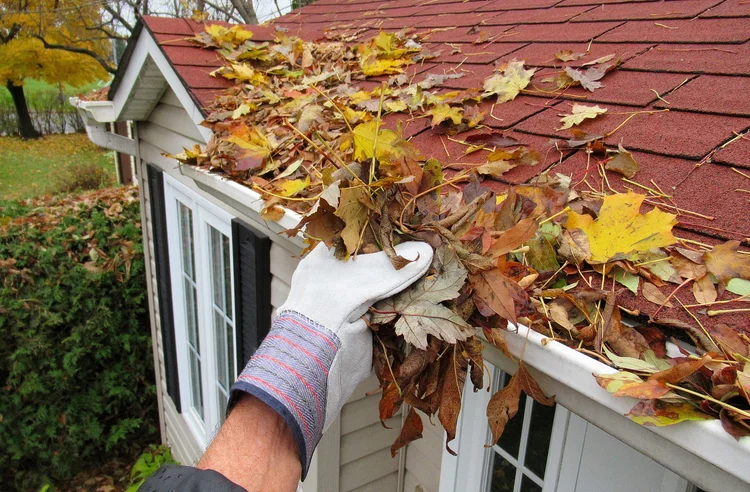
The Pacific Northwest is one of the most demanding climates for gutters in the entire country. Bellingham averages around 33 inches of rainfall per year — and much of it falls as a persistent drizzle that keeps organic debris saturated for days at a time. Add in the Douglas firs, western red cedars, and big-leaf maples that overhang most homes in Whatcom County, and you have a recipe for blocked gutters on a timeline that would surprise anyone moving here from a drier climate.
If you have ever wondered exactly how often to clean your gutters in Bellingham, WA, the answer depends on your lot, your trees, and how much you enjoy avoiding expensive foundation repairs. Here is what David Bach — Spotless Heights owner and 10-year Bellingham resident — recommends based on the homes he services across Whatcom County every week.
The Short Answer: Twice a Year Minimum
For most Bellingham homeowners with a mix of deciduous and evergreen trees nearby, two gutter cleanings per year is the baseline recommendation:
- Late fall (November–December): Clean after deciduous trees have fully dropped their leaves. Big-leaf maple and alder drop heavy loads fast — waiting until leaves are down means you remove them all in one visit rather than chasing them across two cleanings.
- Spring (March–April): Winter accumulates a surprising amount of debris. Fir needles that shed through November and December compact over the wet months into a dense mat. A spring cleaning removes that compacted layer before the summer dry season, when blocked gutters can also trap heat and accelerate fascia rot.
Two cleanings per year is the standard for an average Bellingham home on a modest lot with some tree coverage. It keeps gutters functional, extends the life of your fascia, and prevents the overflow events that send water toward your foundation during heavy November and December rains.
When You Need More Than Twice a Year
Several factors common in Whatcom County push the recommendation to three or even four cleanings annually:
Heavy Conifer Coverage
Douglas fir, western red cedar, and red alder all shed needles and organic debris year-round — not just in fall. A single large Douglas fir overhanging a gutter run can deposit enough needles in six weeks to block a downspout completely. Homes with three or more large conifers within 20 feet of the roofline should consider adding a summer cleaning (July–August) between the standard fall and spring visits.
Homes in Sudden Valley, Birch Bay, or Forested Lots
Sudden Valley sits in a forested hillside community east of Bellingham where homes are often canopied by mature second-growth firs. Birch Bay's marine air keeps humidity elevated, which accelerates the decomposition of leaf litter already sitting in gutters. Both areas regularly see homeowners who need three cleanings per year — and occasionally four on heavily shaded north-facing lots.
After Major Wind Storms
Whatcom County sees wind events in fall and early winter that can strip an entire tree's worth of debris onto a roof and into gutters in a single afternoon. If you experience a storm with sustained winds above 30 mph, schedule a visual inspection within two weeks. The debris load from one bad windstorm can equal two months of normal accumulation.
Signs Your Gutters Need Cleaning Right Now
Do not wait for your scheduled cleaning if you notice any of these warning signs:
- Water spilling over the front edge during rain. This is the most visible sign of a blocked gutter and indicates immediate overflow — water is not reaching the downspout at all.
- Sagging gutter sections. The weight of waterlogged debris and standing water is significant. A sagging section means the gutter is holding water it cannot drain — and the mounting hardware is being stressed.
- Plant growth in the gutters. Moss, grass, and even small shrubs will establish themselves in organic-rich debris. If you can see green growing in the gutter from the ground, it has been blocked long enough to support plant life.
- Staining streaks on the siding. Dark vertical streaks down siding beneath a gutter run indicate the gutter is overflowing along its entire length at a seam or joint. The staining is tannin from rotting organic material mixing with the overflow water.
- Mold or mildew on the foundation wall or crawl space. If water is getting to your foundation consistently, you will start to see biological growth at the base of exterior walls — a sign the overflow has been happening long enough to saturate the soil around the perimeter.
What Happens If You Skip It
Skipping gutter cleaning is one of the most expensive forms of home deferred maintenance in the Pacific Northwest. The costs are not gradual — they tend to arrive all at once, usually after a wet November or a heavy winter:
- Foundation damage: $6,000–$15,000. When gutters overflow consistently, water pools against the foundation and works into cracks. In Bellingham's clay-heavy soil, that water has nowhere to go but sideways into the concrete. Foundation repair is the most expensive consequence of neglected gutters.
- Fascia board rot: $800–$3,000. The fascia board is the wood trim directly behind the gutter. Water sitting in a blocked gutter is in constant contact with the fascia. Over one or two wet seasons, that contact causes rot that requires board replacement — and if it spreads to the rafter tails, the cost escalates quickly.
- Roof damage from ice dams. Ice dams form when heat escaping through the roof melts snow that then refreezes at the cold eaves. Blocked gutters contribute by holding standing water at the eave line that freezes and expands. The expanding ice can work under shingles and cause leaks that only become visible inside the home weeks later.
- Landscape erosion and flooding. A gutter overflowing at one concentrated spot drops a large volume of water on the same patch of ground during every rain event. That erosion can undermine walkways, destroy planting beds, and channel water toward garage foundations or crawl space vents.
Why Spotless Heights Cleans by Hand
A lot of gutter cleaning companies in Bellingham use leaf blowers — they are faster and cheaper to perform. But faster is not better when it comes to your gutters or your yard.
Here is the problem with blower cleaning: fir needles compact into a dense mat at the bottom of the gutter channel. A blower will scatter the loose top layer across your roof, siding, deck, and landscaping — but it will not remove the compacted mat, and it definitely will not tell you whether your downspout is clear. On the next rain, water hits that compacted mat and overflows exactly as it did before.
Spotless Heights cleans every gutter by hand, into a bucket. That means:
- All debris removed — loose and compacted — not scattered around your property
- Every downspout flushed and inspected for obstructions and damage
- Gutter seams and end caps checked for gaps or separations
- Visual inspection of fascia boards behind the gutter for early rot signs
- No power-washing residue or high-pressure water near your landscaping
The process takes longer, but you pay for a clean, functional gutter system — not a yard full of redistributed debris and a downspout that still drains slowly.
Ready to get on a schedule that protects your home? Learn more about our Bellingham gutter cleaning service, or contact David for a free quote — same-day response, no obligation.
Frequently Asked Questions
How often should you clean gutters in Bellingham, WA?
Most Bellingham homeowners need gutter cleaning at least twice a year — once in late fall (November–December) after leaves drop, and once in spring (March–April) after winter debris accumulates. Homes with heavy Douglas fir or cedar coverage should consider three cleanings per year, as conifer needles fall year-round and compact quickly into water-retaining mats.
How much does gutter cleaning cost in Bellingham?
Gutter cleaning in Bellingham typically ranges from $99 to $350 depending on home size, linear footage of gutter, pitch, and how long it has been since the last cleaning. Spotless Heights offers free, no-obligation quotes — call or text (360) 999-1266 for a same-day estimate.
Is hand-cleaning gutters better than blower cleaning?
Yes, for most Bellingham homes. Leaf blowers scatter debris across your roof, deck, and landscaping and do nothing for compacted fir-needle mats in the gutter floor. Hand-cleaning removes all debris into a bucket, allows visual inspection of the gutter seams and downspouts, and leaves your yard clean. Spotless Heights cleans every job by hand for this reason.
Ready to Protect Your Home?
Free quotes, same-day response. Serving Bellingham and all of Whatcom County.